Before You Buy the Backpacks, Look at the House
August hands every mother the same short list. Pencils. New sneakers. Physicals. Sports forms. Whatever the school portal decided needed to be filled out by last Tuesday. We spend three weeks getting our kids ready for the year and somehow never ask if the house is ready for them.
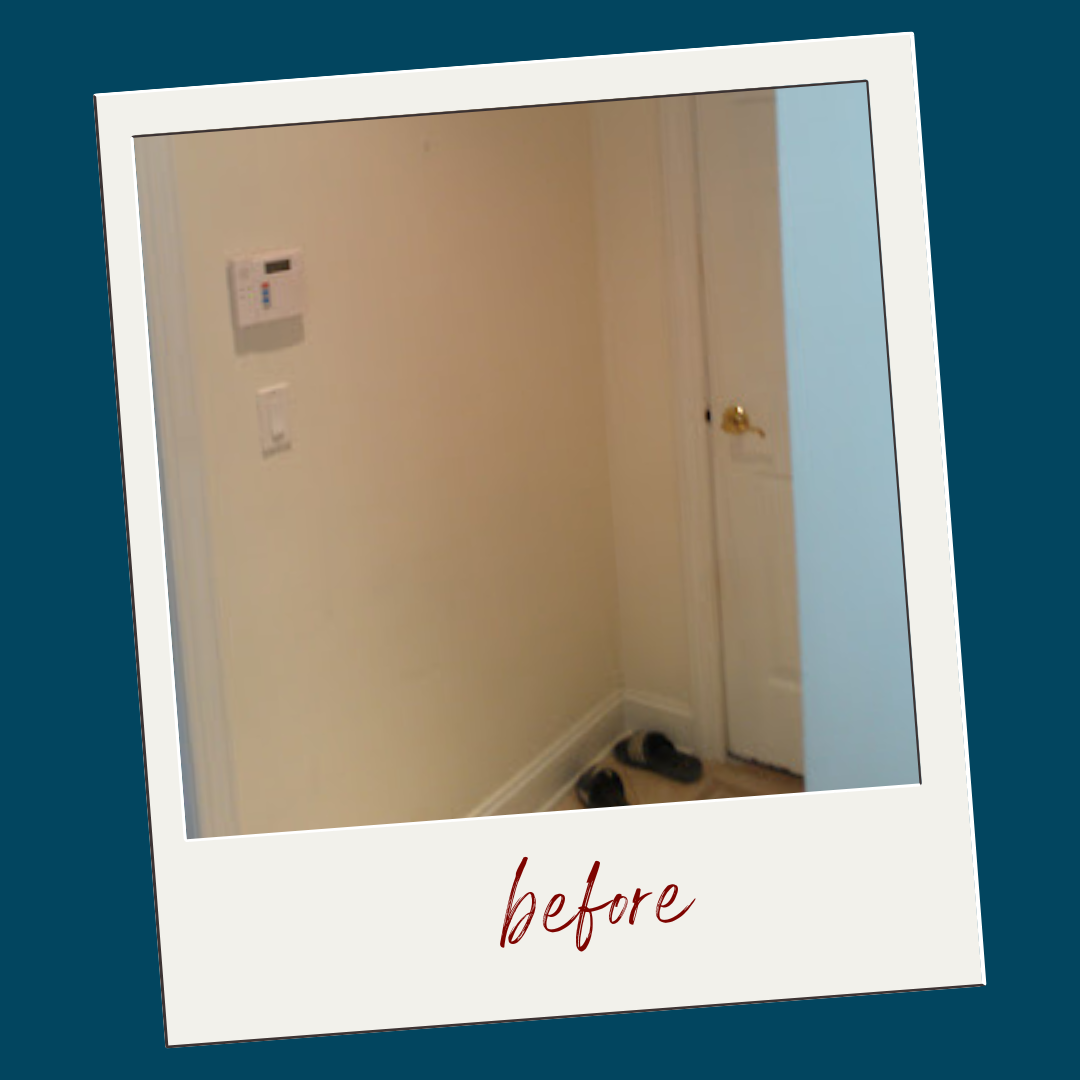
Before image of mudroom hallway
A client called me this summer sounding worn thin before the year had even started. Wife, working mother of three kids, each with a different strength, a different pace, a different way of doing things. She has never treated her home as a project worth investing in. Trips, the kids' activities, the family's future, those got the budget and the attention. The house was always going to get destroyed anyway, so why put money and thought into something three children were just going to undo by dinner.
But she's spending more time home now, and the chaos she used to move past without noticing started to feel like something she was living inside of. Nobody put anything back. Nothing had a place, which meant everything required her. "Mom, where's my cleats." "Mom, have you seen my folder." Over and over, in a house where she was the only system anyone trusted.
That's not a clutter problem. That's a structure problem, and the two get treated the same by most organizing advice out there, which is part of why the advice doesn't stick.
There Is No One System
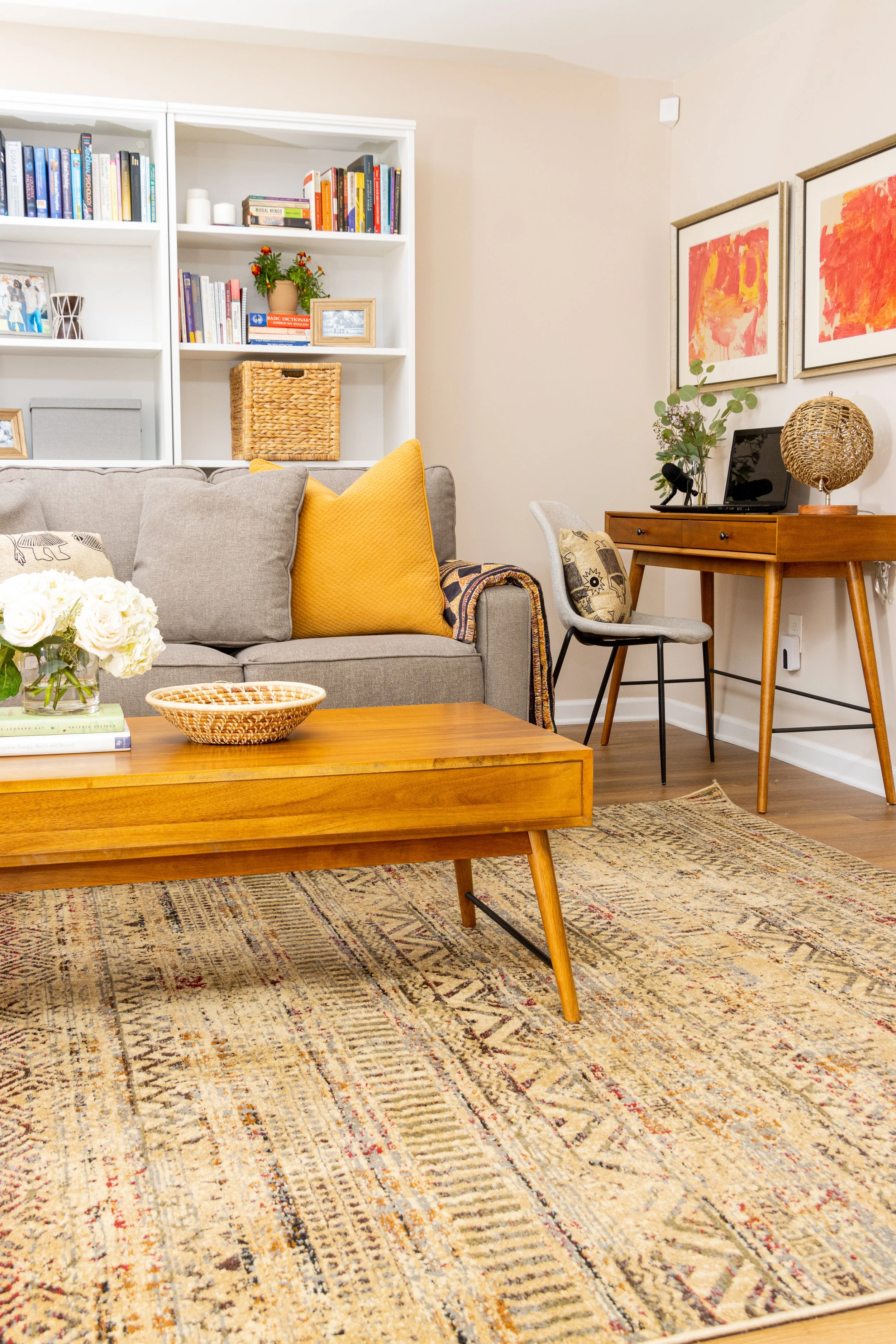
I did a full walkthrough of her home, room by room, and handed her an assessment with what I saw and what could shift. She told me afterward that it felt honest, nothing softened or hidden, and that she still walked away feeling like the decisions were hers to make. Then she said something I haven't stopped thinking about: every mother needs a plan for her home before school starts, the same way she has one for her kids.
I agree, with one condition. That plan can't look the same for two families, because it can't even look the same for two kids in the same family. I've talked with homeschool mothers who structure their whole first floor around the rhythm of their day, school and meals and play folding into each other by design. I've worked with families where the answer was the opposite: a bedroom desk for the kid who needs to close a door, a shared table for the one who does better with noise around her. Neither is right. Both are right for the kid standing in front of you.
The starting question isn't "what's the best homework station." It's "how does this particular family move through this particular house." Where do backpacks land the second everyone walks in. Where does the actual eating happen versus where the table sits. Which kid needs a wall to face and which one needs to see the room. You can't answer that from a catalog. You answer it by watching your own family for a week and being honest about what you see, not what you wish you saw.
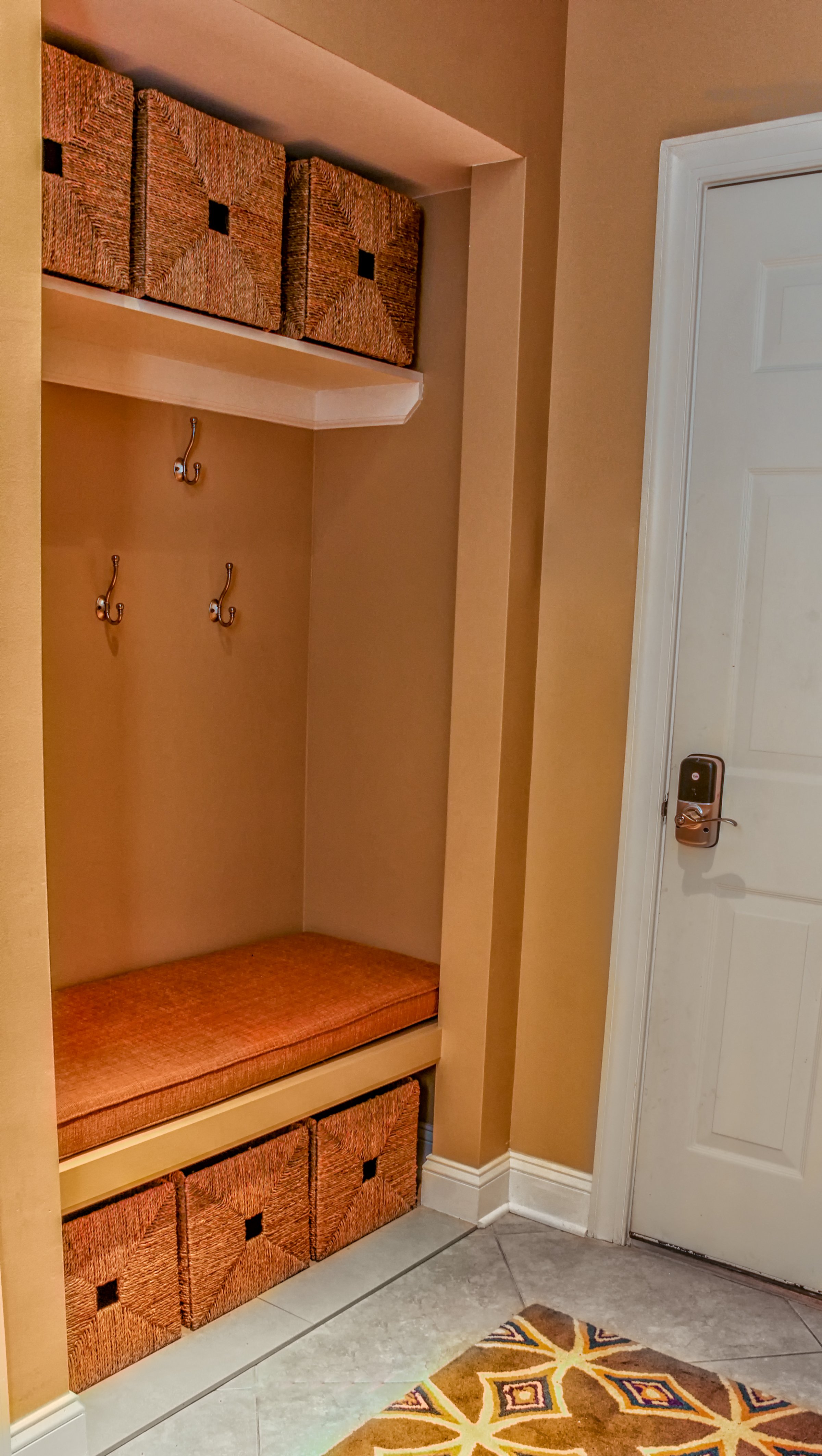
After photo of mudroom hallway
Editing Never Finishes
Something else worth saying plainly: getting a home ready for a new school year isn't a weekend project you check off once. It's an edit that keeps happening, because your kids keep growing out of who they were in June. The bin of toddler toys, the changing table still in the corner, the desk that fit a seven-year-old and now houses a twelve-year-old's knees somewhere near his chin. Furniture and belongings that once served a real purpose can quietly turn into things that just take up floor space while doing nothing for the people living around them.
Walking a room and asking "does this still work for who my kids are right now" is a habit, not a task. Some families do it every August. Some do it every time a school year ends and a summer begins. The frequency matters less than making it a rhythm instead of a rescue mission you only run once the house has already gotten away from you.
What This Looks Like in My Own Family Room
I'm doing this in my own house right now, specifically the family room, and my two kids organize nothing alike. One puts things away if there's a clear spot for it. The other needs the spot to be visual, or it doesn't exist to him. So the room is built around both of them, not around a single idea of what a homework station should look like.
There's a central spot for homework, close to a bookcase stocked with art supplies, books, and magazine files that hold loose worksheets before they turn into a pile on the counter. A round table with four or five seats so more than one kid, or a friend, can work at once without anyone feeling stuck at a desk alone. Artwork goes up on the wall, theirs, not something bought to match the room. And there's a command wall by the door: hooks for backpacks at kid height, a board for the permission slips and calendar pages that otherwise live in the bottom of a bag until it's too late.
None of that is a formula to copy exactly. It's what our flow needed. Yours will ask for something else.
Small Systems That Teach Big Things
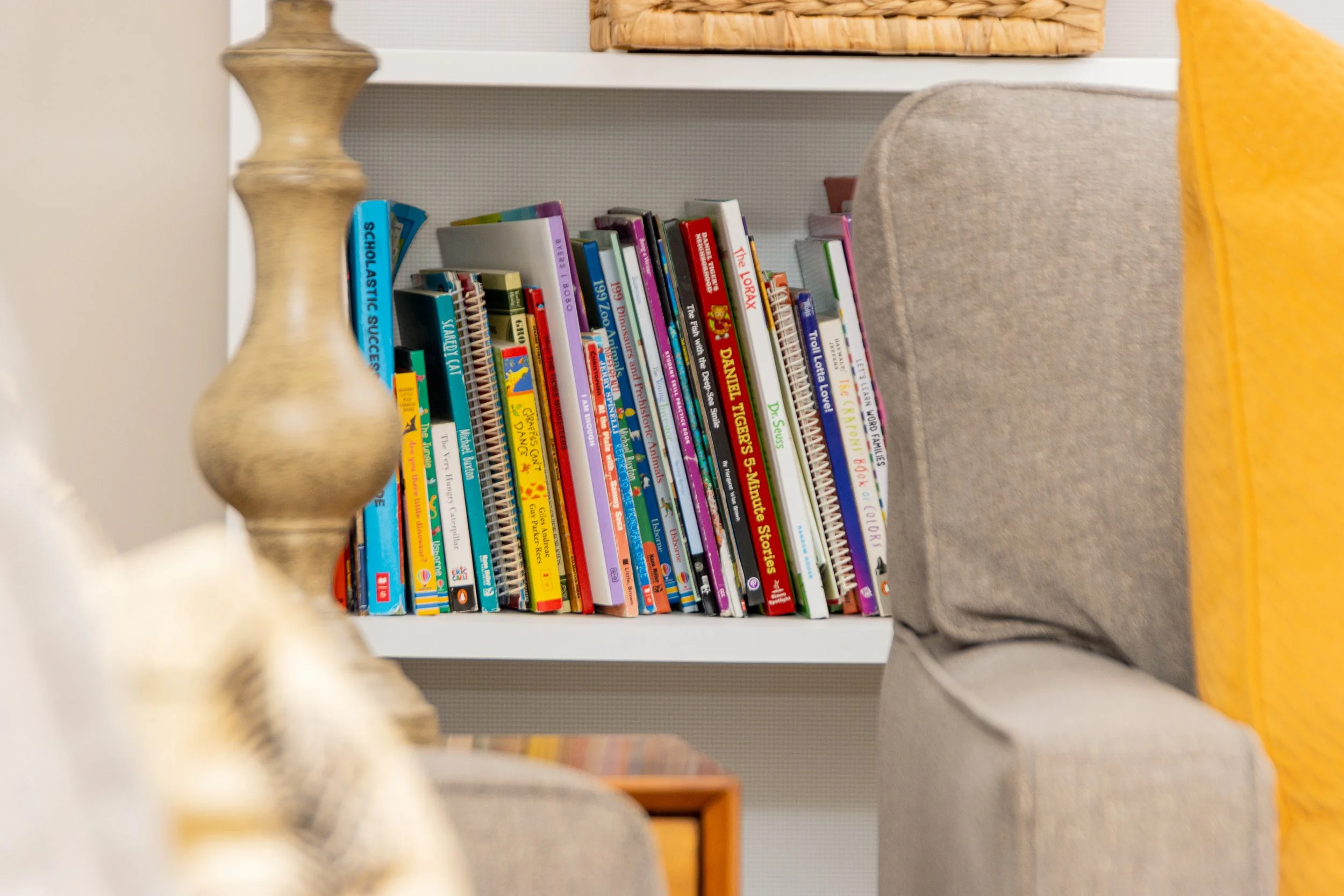
The best home systems don't just create order, they teach kids to be the ones who maintain it. A bookshelf arranged by color instead of by author sounds decorative until you watch a six-year-old find and return a book without asking anyone for help, because "the orange one" is a system a six-year-old can actually use. Labeled bins with pictures instead of words do the same for a kid who isn't reading fluently yet. A chore chart that's a permanent fixture instead of a poster nobody revisits does the same for the ten-year-old who is capable of far more independence than she's usually given credit for.
The goal isn't a house that looks organized for a photo. It's a house where a kid can find what he needs and put it back without a parent standing over him. That's what buys back a mother's evenings, not another bin.
Beyond Organizing: The Room Itself
Function matters most, but the room still has to want to hold you. A wall color that's felt tired for two years, a gallery wall that stopped being edited around the time your youngest started school, lighting that leaves a homework corner dim by four in the afternoon come November. These aren't separate from the organizing conversation. A room that looks cared for tends to get treated like it's worth caring for, by everyone in the house, including the kids.
And seating doesn't have to be a chair. Some of the best homework setups I've built use a bounce ball instead of a desk chair for a kid who thinks better in motion, or a low bench instead of stools so a nine-year-old can shift positions ten times in an hour without anyone calling it fidgeting. Structure and stillness aren't the same thing. A room can hold both.
Where to Start
You don't need a full renovation before the first day of school. You need one walk through your own house, paying attention the way you'd pay attention to anything you actually wanted to understand. Where does the day break down. What gets left where it shouldn't. What's been outgrown and never removed. What would change if every person in your house, not just you, knew where things belonged.
That's the plan. Not a Pinterest board. A house that finally works the way your family lives in it.
If you want that walkthrough for your own home, a Design Home Assessment starts there.