A Home That Holds You
A few weeks ago, I said something out loud that I don't usually say.
I was telling a friend about the work that I do - not the paint colors, not the before-and-afters, none of the parts people usually ask me about. I told her the real reason I do this: I design homes to hold the women who live in them.
She got quiet for a second. Then she said, "You need to talk about that more. I don't think people really know that's what you do."
She was right. And it stung a little, because it meant I'd been hiding the truest part of my work behind the parts that are easier to photograph.
So here it is, plainly, the way I told her.
I design sanctuary-feel interiors for busy women. For mothers, founders, professionals - women who carry a lot, all day, for everyone else.
My job isn't to make your home look impressive. It's to make it a place that meets you at the door and says, you can put it down now.
Most design talks to your eyes. I want to talk to your nervous system.
There's a difference between a home that photographs well and a home that regulates you. You already know the difference, even without the language for it. It's the difference between walking into a room and feeling your shoulders creep up toward your ears and walking into a room and feeling your exhale arrive before you've decided to take it.
Beauty isn't the wrong goal. It's just not the whole goal. The whole goal is a home that does some of the holding your nervous system has been doing alone all day.
For the women I work with, that holding matters more than almost anything else in their life right now. You're the one who notices everyone else's needs before your own including your kids', your team's, your clients', your household's. Nobody is checking in on whether the room you actually live in is doing anything for you. So the home has to.
What nervous-system-aware design looks like
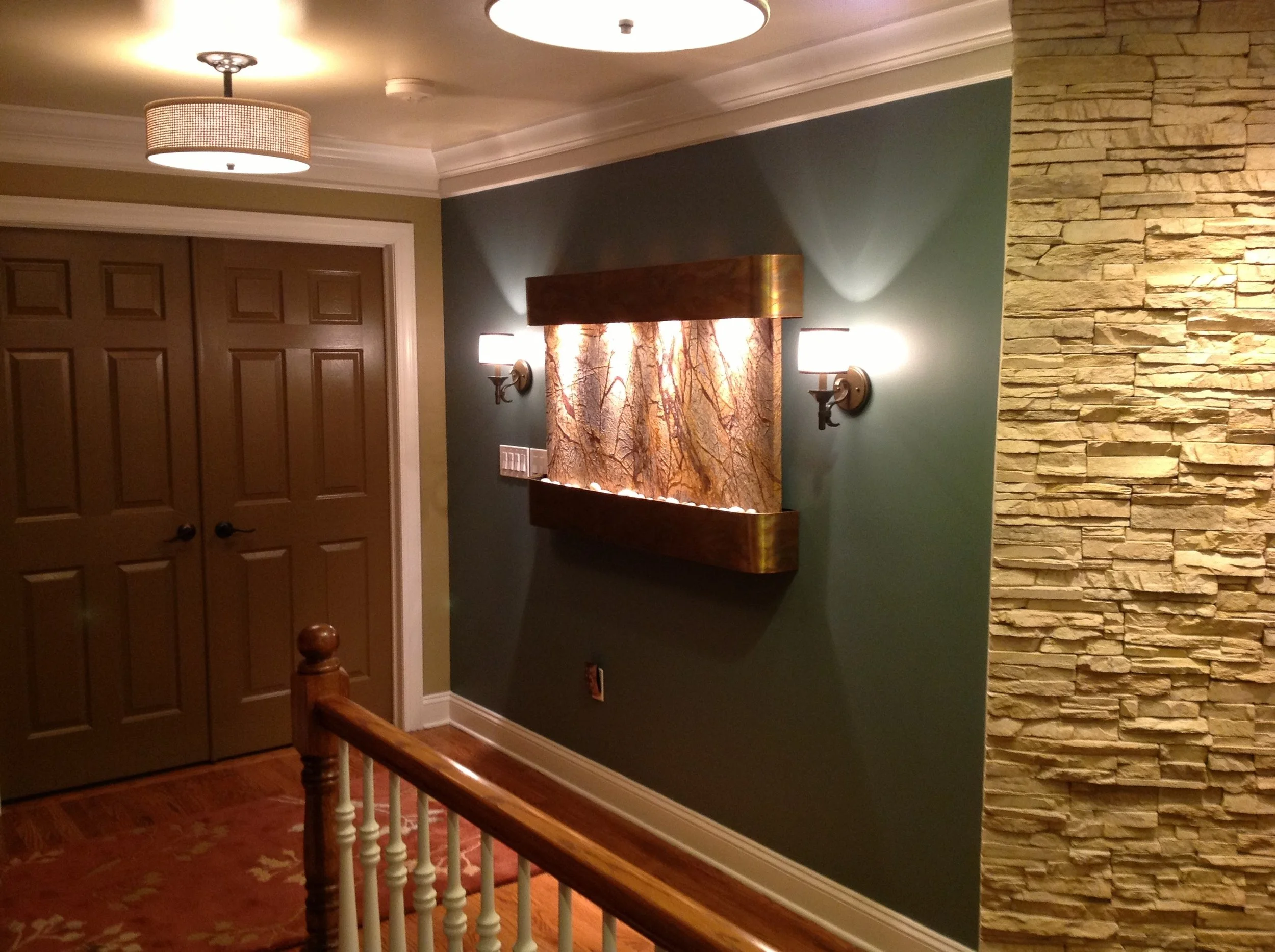
It's not a mood board of neutrals and a pretty furniture. It's specific, and it's practical.
The room you enter first. Most homes greet you with mail, shoes, bags… decision fatigue before you've even set your keys down. A true threshold does the opposite: it gives your body a two-second cue that you've arrived somewhere safe. Sometimes that's as simple as one object you touch on your way in - a bowl, a dimmable light switch, a color that only lives in that spot.
The colors you keep avoiding. Color is the fastest, least expensive way to shift how a room feels on your body and it's the thing most women get wrong first, not because they have bad taste, but because no one ever taught them how undertones behave in real light. The color you keep talking yourself out of is usually the one your body wants.
One ritual object, protected. A chair no one else sits in. A specific mug. A candle you only light for yourself. It sounds small. It isn't. Ritual is how a nervous system learns a room is safe to soften in.
None of it requires a full renovation. It requires intention, which is the one thing busy women have the least spare capacity for, and the one thing I have the most capacity to bring.
This isn't abstract
I've had a client tell me that changing the lighting in her home helped her manage her vertigo. Not decorate around it but manage it. That's not a coincidence. Your nervous system reads a room before you consciously register anything about it: the temperature of the light, the weight of the color on the walls, whether a space feels like it's closing in or holding you up.
I come by this honestly. My mother and grandmother were noticers, women who paid attention to beauty other people walked past. I think what I do now is an extension of that: paying attention to what a room does to the body, not just to the eye.
A lesson from my summer reading
I've been making my way through Never Eat Alone and The Art of Gathering this summer, and one idea from Priya Parker has stayed with me. She talks about the threshold - the specific, deliberate moment someone crosses from "out there" into a gathering. She argues most hosts never design that moment on purpose.
Neither do most homeowners.
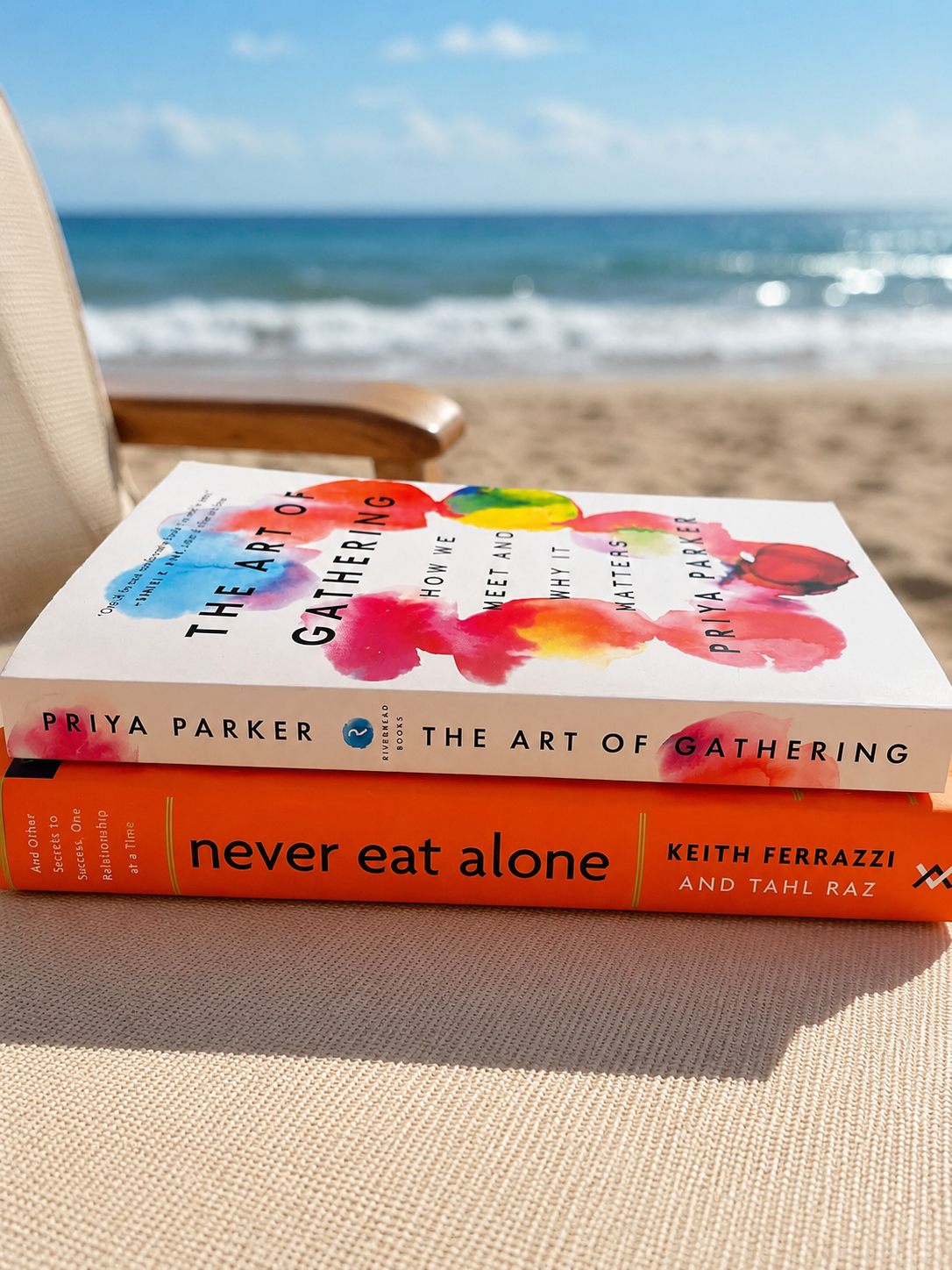
I'm in the very early stages of thinking about what that means for the women I design for - not just how they gather other people, but how they gather themselves at the end of a day. More on that soon. For now, I'll just say: the door you walk through every single day deserves the same intention you'd give a dinner party.
Three things you can do this week
Notice which room in your house makes your shoulders drop and which one does the opposite. You already know the answer before you finish reading this sentence.
Name the one color you keep circling back to and talking yourself out of. Ask yourself honestly why.
Reclaim one square foot that belongs to no one but you. A chair. A shelf. A windowsill. Protect it.
Where to start, if this is landing for you
You don't need to redo your whole house to start regulating it. Color is the single fastest way to shift how a room holds you - it's the entry point I built the Color Palette Guides for. Coastal Calm and Seaside Breeze are both live now: twenty pages each, walking you through exactly which tones do this kind of work and how to use them in your own home, room by room, without guessing.
Explore the Color Palette Guides →
Here's the truth: you don't need a full design engagement to start feeling different in your own home. You need one room that finally holds you the way you hold everyone else.
Because home shouldn't be another place where you perform. It should be the place where you finally get to rest. Trust what makes you exhale.
Sabine
Book links above are Amazon links. As an Amazon Associate, I earn from qualifying purchases — at no extra cost to you.