Create a Home That Helps You Recover From the World
There was a moment in a movie I watched recently that I haven't been able to stop thinking about.
Two characters are standing in a beautiful home with custom built-ins decorated with books, warm light, a room that feels like a family lives there. One of them looks around and says, you're a reader. And the other one laughs. No, he says. Those aren't real books. The interior designer put them there.
I sat with that for a minute. Because as a designer, I’ve absolutely styled with books. I love incorporating coffee table books, art books, vintage finds, and collected pieces into a room. Books bring texture, color, personality, and visual weight to a shelf or coffee table. They help a room feel layered and lived in.
But there’s a difference between styling with books that add beauty and creating an entire library for someone who doesn’t read. One enhances the story of a home. The other invents one. One is design. The other is theater.
And I think that distinction is at the heart of why so many people feel exhausted by their own homes.
Why Lived-In Looks Are Having a Moment
The return of warm, collected, character-filled homes. Rooms with family heirlooms, shelves that tell a story, layered textures, and pieces gathered over time. There's a reason all of it is having a cultural moment right now and it isn't just trend cycling. We are collectively over the pristine and generic.
After years of white walls and perfectly staged, magazine-ready rooms that photographed beautifully and felt like nothing, people are craving warmth. Realness. The feeling that someone lives there. That the home has a story. I believe that craving is actually a nervous system response.
Your nervous system is always reading your environment. It’s paying attention to the details around you from the colors, the lighting, the textures, the memories, and the pieces that remind you this is your home.. A perfectly styled room may look beautiful in a photo, but if there’s no connection to your life, it can feel empty. A home shouldn’t just impress you when you walk in. It should help you settle, breathe, and feel like you belong.
The lived-in look is popular right now because people are unconsciously searching for homes that feel safe. Homes that exhale.
But here's where I want to complicate the conversation.
The Trap of the Trend
The mistake I see, and I see it constantly, is people adopting the aesthetic without doing the inner work of asking: Does this reflect my life and how I function in my home?
The library is a perfect example. Libraries and home studies are trending. So people build them. Curated shelves, rolling ladders, beautiful leather chairs. Stunning. And if you love books, if you enjoy reading (or aspire to), if books are part of how you relax and restore yourself - then yes, absolutely, a library is a room or wall that will support your nervous system every single day.
But if you don't love to read? If the books are props and the room never gets used? That room is not regulating you. It's performing for guests. And your home deserves to do more than perform.
What a Nervous-System Home Looks Like
I want you to sit with a question: What do you really do when you want to come home and exhale?
Not what you think you should do. Not what looks good. What do you actually do?
If you love playing cards and board games with people you love - you need a game room. A real one, with a card table that looks like a beautiful piece of furniture and comfortably styled chairs and essential lighting with a place to store your games so they're accessible.
If you watch movies the way some people practice meditation (fully present, transported) you need a proper movie room. Not a TV in the corner of a room designed for something else, but a large TV or projector on a dedicated wall with dimmable lighting, lounge seating, and a number of small drink tables just large enough for a drink and maybe a snack.
If movement is how you release stress, your home should have a room (or area of a room) for a home gym. Even a modest one. Even just a dedicated corner with a sleek rack for your stored away mats, one or two exercise equipment, and a large mirror somewhere. The point is that your body has somewhere to go.
This is what it means to design for your nervous system. Not a trend. Not a therapy buzzword. It’s the intentional choice to create a home that reflects the rhythm of your life - how you rest, gather, create, recharge, and connect.
Beauty matters. But beauty becomes more powerful when it has a purpose. A home should not only be something you admire. It should be something you experience.
Color Is Part of This Too
One of the most overlooked ways your environment speaks to your nervous system is color.
Not color as decoration. Color as an atmosphere.
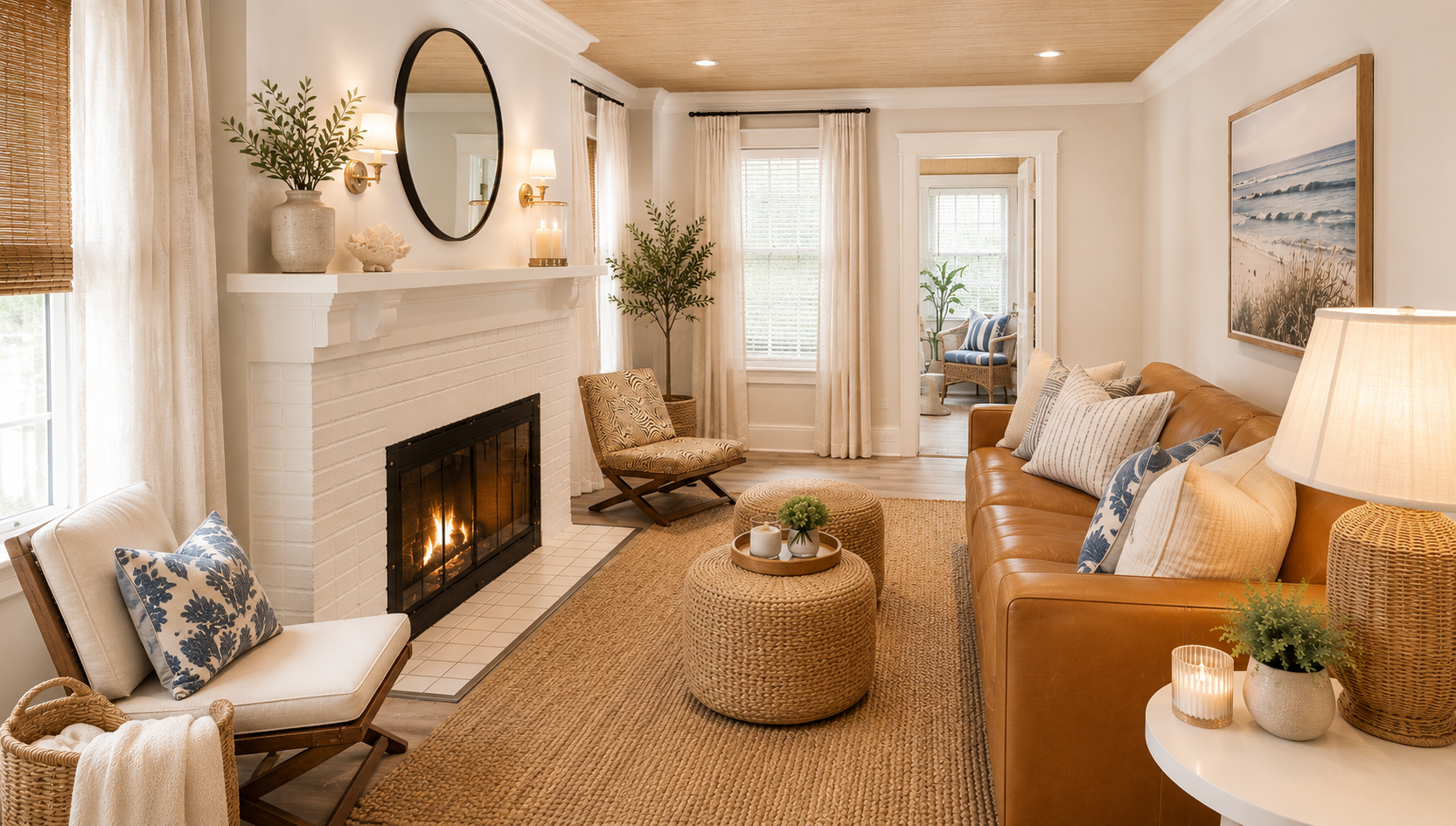
This is exactly why I spent so much time reimagining and expanding my signature color palette collection, starting with the reintroduction of Coastal Calm and Seaside Breeze, just in time for summer.

Both color palette guides were built around a specific feeling, not a specific trend. Coastal Calm was designed for the woman who wants her home to feel like the hush of an empty beach house off-season - quiet, grounded, settled. Seaside Breeze is for the woman who wants something softer and more alive - like a garden by the sea when the first real breeze of summer comes through and you want to open every window.

Each guide is a full 20-page designer companion: six curated colors with designer notes on undertones and where to use them, two mood splits showing how to weight the palette for different feelings in a room, coordinating finishes, room-by-room application, the most common mistakes to avoid, and a shoppable LTK collection so you're never guessing.
Because your palette should do more than look pretty. It should tell a story, create a feeling, and turn your house into a place you truly love coming home to.
Waitlists are open now for early access and early-bird pricing for the first 48 hours after launch.
→ Coastal Calm — Join the Waitlist → Seaside Breeze — Join the Waitlist
“Stop designing for the trends. Start designing for the way you live.”
Your home is the environment your nervous system lives in every single day. It shapes your mood before you've had your first cup of coffee. It either helps you recover from the world or quietly adds to the load.
That's where the real beauty is.
Ready to start building a home that actually works for you? Start Your Design Path →