

I am Sabine Guillaume Hayes, interior designer & founder of Georgette Marise Interiors. Someone who has spent over ten years believing that your home should feel like the truest version of you.
I work with homeowners across the Main Line PA, Northern Delaware, and South Jersey who are done living in spaces that almost feel right. This is where I share what I have learned. About design, the homes I have worked in, and about what it actually takes to make a home feel like it belongs to the person inside it.
Love a well-designed room? Start with a signature scent. Explore the Belfong Candle Collection inspired by legacy, created for the senses.
Need a color palette or design guide? Shop my eBooks + digital boards for instant inspiration.

Elevate Your Holiday Dinner Parties with Stylish Interior Design Decor
The holiday season is upon us, and what better way to celebrate than by hosting unforgettable dinner parties? As an interior designer and avid entertainer based in Pennsylvania, I'm excited to share some tips on how to elevate the look of your dinner party and make this festive season truly special.

Elegance for Timeless Celebrations: For a timeless and sophisticated atmosphere, consider a classic holiday dinner party look. Think rich colors, beautiful glassware, and ambient lighting. Incorporate elements like deep burgundy, maroons, shades of plum, gold accents, ivory tones, and elegant table settings. Check out these classic pieces to elevate your soirée:

Holiday Dinner Party Mood board
Modern Minimalism with a Festive Twist: For those who appreciate clean lines and a modern aesthetic, a minimalistic holiday dinner party might be the way to go. Keep things simple yet festive with neutral tones like classic black hues, rich dark green tones, softened by hints of pinks and lilacs for an unexpected twist. Incorporate seasonal touches such as string lights and candles to bring some holiday cheer! Here are some modern picks to achieve this look:

winter dinner party mood board
Whether you opt for classic elegance or modern minimalism, the key is to infuse your personality into the design. As you plan your holiday dinner parties, remember that the joy is in the details. Each element contributes to the overall ambiance, making your guests feel not only welcome but immersed in the magic of the season.
Ready to elevate your holiday dinner parties to a whole new level of style? Explore the curated looks I've shared and transform your celebrations into unforgettable moments of warmth and sophistication. Click the links to effortlessly shop for the pieces that catch your eye, and let the magic of design infuse joy into your festivities.
This holiday season, let's celebrate not just the festivities, but the art of bringing people together in spaces that reflect joy and good design. Cheers to a season filled with laughter, good company, and the beauty of a well-designed dinner party! Happy hosting!

Just a heads up, some of the links provided are affiliate links, which means I may earn a small commission if you purchase through the links—thanks for supporting the blog!

The Quick Fix: How a Day with an Interior Designer Can Transform Your Home
Do you walk around your home, loving some rooms and but not others? Do you flip through photos on Instagram or Pinterest asking, “How do I get my home to look like that?”. Good design is intentional. When you look or walk into a beautiful space even if it has a “lived-in” look, it’s important to know that every material and finish selected, color palette chosen, and furniture placement was part of an overall plan. That plan is the design. Chances are the plan was created by a professional interior designer who created a design based on the needs of the end user aka - the client.
Good design is intentional.

When it comes to designing a home there are a lot of moving parts. I usually compare it to a book. The cover gives you an overall feel of the tone and style of the book before you dig into the chapters. Each chapter ends and transitions into the following chapter which either picks up where the last chapter ended or gives a different scene or angle to the overall story. Interior designers interview their clients, identifying their needs, desires, lifestyles, and goals to translate that to their homes. Each room in a home is a chapter - having its own identity but part of a big picture.
Hiring an interior designer can truly change the way you live in your home. If you’re looking to work on one chapter at a time, hiring an interior designer for a day can be an efficient way to improve the look and feel of your home. Here are some reasons you may want to consider hiring a designer for a day.
Expertise and Professional Advice. Interior designers have the knowledge and expertise to transform spaces, ensuring they are both functional and aesthetically pleasing. By hiring a designer for a day, you can tap into their professional advice and get expert recommendations on colors, layouts, furniture placements, and decor choices that align with your style and needs.
Budget-Friendly Solutions. Interior designers can work within your budget, helping you make the most of your available resources. They can provide cost-effective suggestions for renovations, furniture, and accessories, and help you avoid costly mistakes that may arise from DIY attempts. Keep in mind when hiring a designer and purchasing furnishings, a higher quality product or service often comes with a higher price tag.
Save Time. Designing a space can be time-consuming, especially if you're not familiar with the process. Interior designers are well-equipped to make efficient decisions, select appropriate materials, and manage projects effectively. Hiring a designer for a day can save you valuable time by making quick decisions that will change the look and feel of your room, especially if you have a tight schedule.
Fresh Perspectives. Interior designers bring a fresh and creative perspective to your space. If you have a designer at your home for the day they can suggest innovative design ideas that you might not have thought of on your own, helping you achieve a unique and personalized look for your home.
Problem Solving. Interior designers are skilled at problem-solving and can address issues such as layout challenges, awkward spaces, and lighting problems. Whether it's reconfiguring your furniture arrangement or recommending the right lighting fixtures, they can help you find practical solutions to enhance your living space.
Hiring an interior designer for a day can be a smart investment, particularly if you're looking for professional guidance, want to avoid costly mistakes, and desire a more efficient and aesthetically pleasing outcome for your home that reflects your personality. It allows you to access their expertise and creative insights without committing to a long-term project. Never worked with a designer before? Be sure to read my post on 5 Things you Should Do When Working with an Interior Designer.

Do you have a room that is in need of some changes but you don’t know where to start and don’t have the time to figure it all out? Ask me for help! No really, ASK ME! Hire me for a day and I will come to your home and help you complete a room in your home in one day. I will survey your room, discuss some of your goals and vision for your space and come up with a plan. While at your home I will make some changes, whether that’s moving some furniture around or hanging some wall decor up or maybe even go shopping for some decor pieces. Together we can make major improvements to your room in ONE DAY!
For a limited time I am giving clients that opportunity to hire me for a day! It’s called Ask Sabine! Interior Designer Access. My time is limited and so it this offer. This is your time to pick my brain while getting access to me in real-time! Reserve your spot now before this offer is over! Comment below and share with me what room you want to complete in one day.

Cozy Up your Space: A Guide to Preparing your Home for Fall
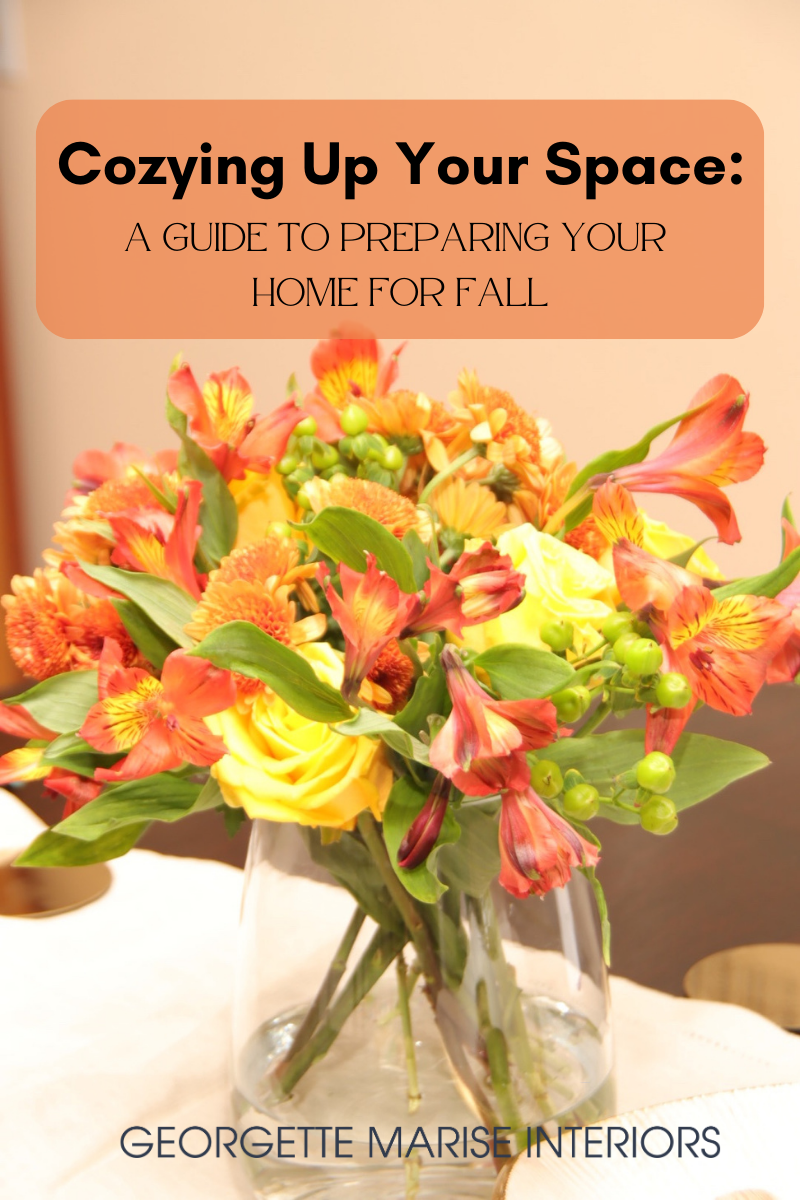
As the leaves begin to change and the temperature starts to drop, it's time to give your home a warm and inviting makeover for the upcoming fall season. I personally love the fall season. It sets a fresh start for me - the beginning of school, a new football season, and my birthday month to name a few! From rich, earthy colors to cozy textures and subtle decor changes, there are countless ways to transform your space into a haven of autumnal charm. In this blog post, I’ll guide you through getting your home ready for fall so that you can embrace the season with open arms.
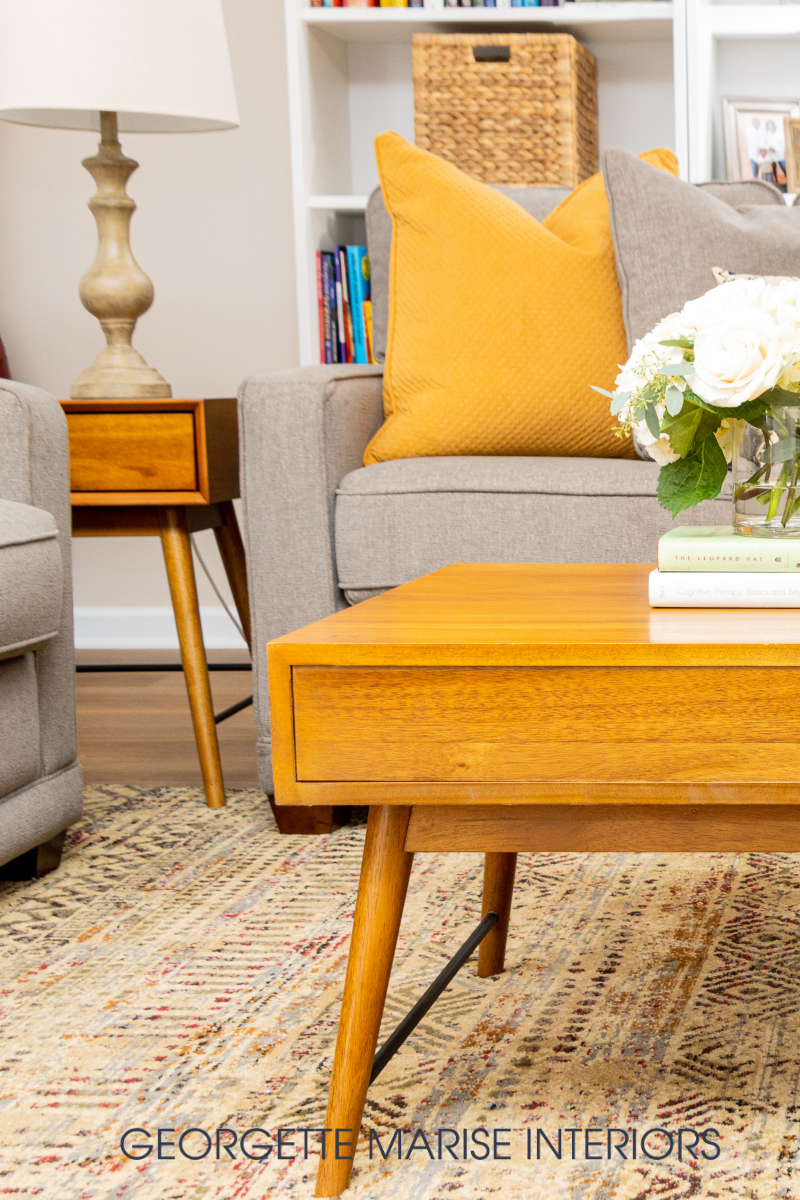
layers of textures to give this living room a warm aesthetic. designed by Georgette MArise Interiors
Embrace Earthy Tones. Fall is all about celebrating the beauty of nature's transformation, so it's the perfect time to introduce earthy tones into your home. Consider replacing summer accents with warm, deep colors like burnt orange, forest green, and rich brown. Swap out lightweight, bright-colored textiles for darker, cozier fabrics like velvet, wool, and flannel. These changes will instantly make your home feel more autumn-ready.
Layer Up with Textures. One of the joys of fall is snuggling up in warm, comfortable layers, and your home can reflect this feeling too. Add soft, plush throws and cushions to your sofa and chairs. Consider a thick, textured area rug to add warmth to your floors. Don’t be afraid to play around with additional textures such as wood, rattan, and knitted fabrics to create a cozy, tactile atmosphere.
Create a Seasonal Centerpiece. Creating a seasonal centerpiece for your dining or coffee table is a simple yet effective way to usher in the fall spirit. Gather a mix of pumpkins, gourds, and autumn leaves for a rustic and natural look. Add candles in warm hues for a touch of elegance. Your centerpiece will not only be visually appealing but will also infuse your space with the delightful scents of fall.
Enhance Lighting. As the days grow shorter, lighting becomes even more crucial. Invest in soft, warm lighting options like table lamps, floor lamps, and candles. Consider using fairy lights or string lights to add a touch of magic to certain areas of your home decor. Dimmable lights can create a cozy, intimate atmosphere for those chilly autumn evenings.
Swap Out Seasonal Decor. Finally, consider swapping out your summer decor for fall-themed items. Replace lightweight curtains with heavier drapes to keep the warmth in. Change out your outdoor cushions and wreaths with fall versions. A front porch adorned with pumpkins and mums can create a warm welcome for visitors.
Getting your home ready for fall is all about creating a cozy, inviting space where you can fully embrace the beauty and warmth of the season. By incorporating earthy tones, textures, seasonal decor, and lighting, you can transform your home into a fall-inspired sanctuary. So, grab your favorite fall-scented candle, and a cozy blanket, and get ready to enjoy the magic of autumn in the comfort of your own home. Share in the comments below your favorite fall decor element.
Happy Fall!

How To Transform your Home Into a Place That Brings you JOY
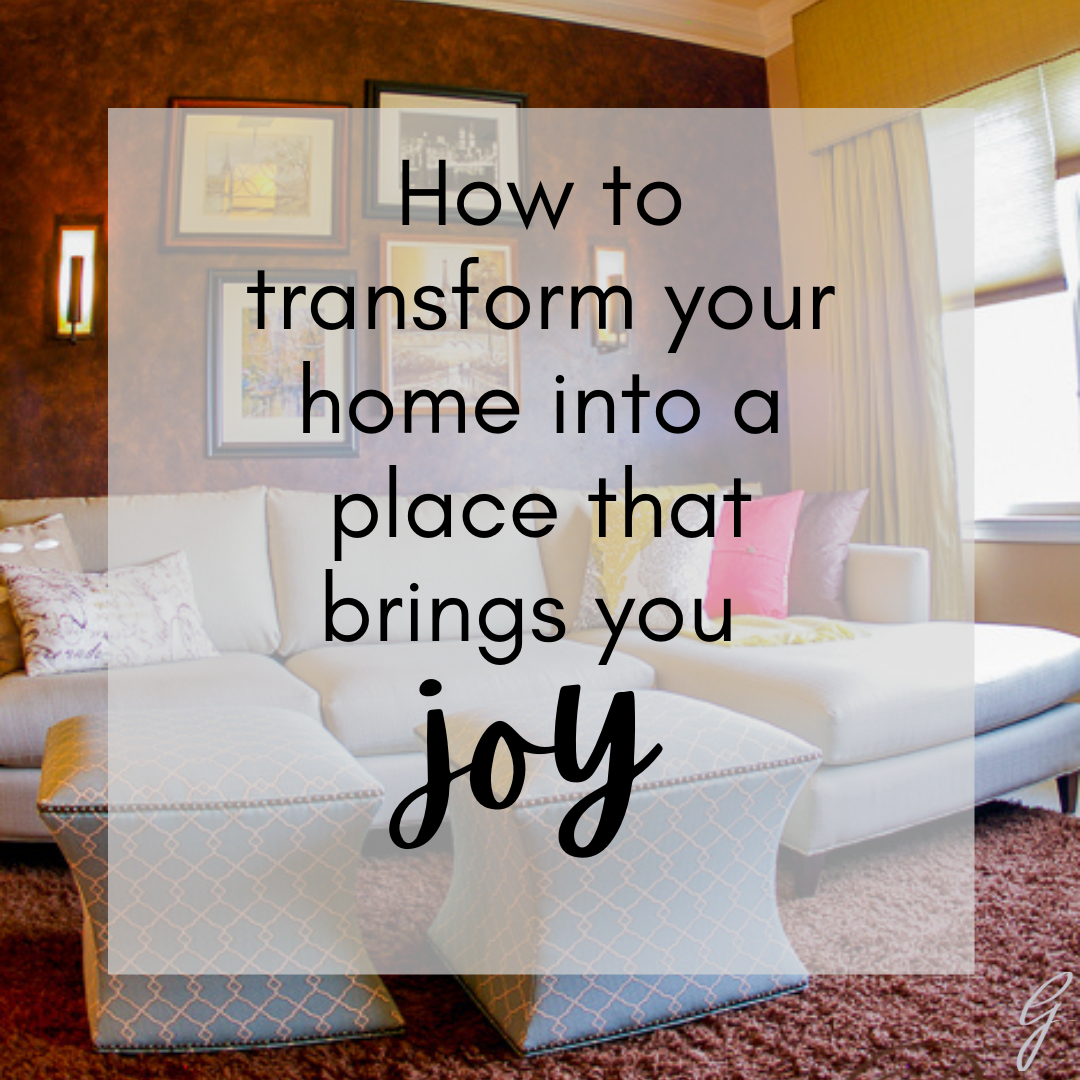
sitting room design
Home. It’s where we’ve officially spent most of our time in 2020. Our homes are playing new roles this year forcing us to reexamine the function of the spaces around us.
Your home is a representation of you. It should tell your story and be uniquely yours. Even if you’re not in your dream home - maybe you’re in a starter home or in between homes - the interiors of your home can and should service your essential needs and desires. Your home should inspire you, bring you joy, help you feel relaxed, keep you safe, and ultimately showcase your personality - and even your family’s personality.
How do you create this sense of ease and beauty in your home-you maybe asking? Let’s get into some of the practicals of how you can transform your home into a place that brings out your personality while servicing your needs and desires.

Interior Designer, Sabine Guillaume HAyes
Evaluate & Prioritize. Before you can rearrange, design or decorate anything you need to ask yourself what’s important. What are the main things you do at home that are important to you? Does cooking bring you joy? Focus on your kitchen. Do you love to entertain? Start with your dining and living room. Is family time essential to you? Start with a family room. Do you crave rest after working long hours? Start with your bedroom. In addition to focusing on the rooms that are important to you, I also recommend starting with a “self-care” space or a “you” space. Somewhere you can pause, retreat, and getaway for a moment. It can be a corner in your bedroom or a bonus room, dedicate a space where you can pause for a moment to read, pray, journal, meditate, exercise, etc.
Plan. Every project needs a plan. After you’ve evaluated your important rooms-develop a timeline of which ones you would like to complete first with a budget. You may not be able to complete your entire home at once but I highly recommend completing one room at a time. No matter how tempting, complete one room before starting another room. Why? It’s easy to get discouraged when you see portions of a room completed here and there. Think of design as a puzzle: all the pieces need to come together and fit perfectly to create a complete image. If you only have sixty percent of the puzzle complete, you can’t enjoy the full beauty or clarity of the image.
Execute. Once you’ve evaluated the goal of your project, planned a timeline and budget it’s time to design and decorate! This is where you may want to bring in an interior designer to help you put all your needs, desires, and styles together. However, if you are doing-it-yourself here are the steps I recommend taking to complete the design of your room.
Break down your plan.
Find or create your inspiration.
Layout your room - based on the room’s function write down the furnishings you would need.
Shop for your items. Invest in your large and most used pieces.
Tell your story by pulling all of the room’s components together - color palette, furniture placements, textures and patterns.
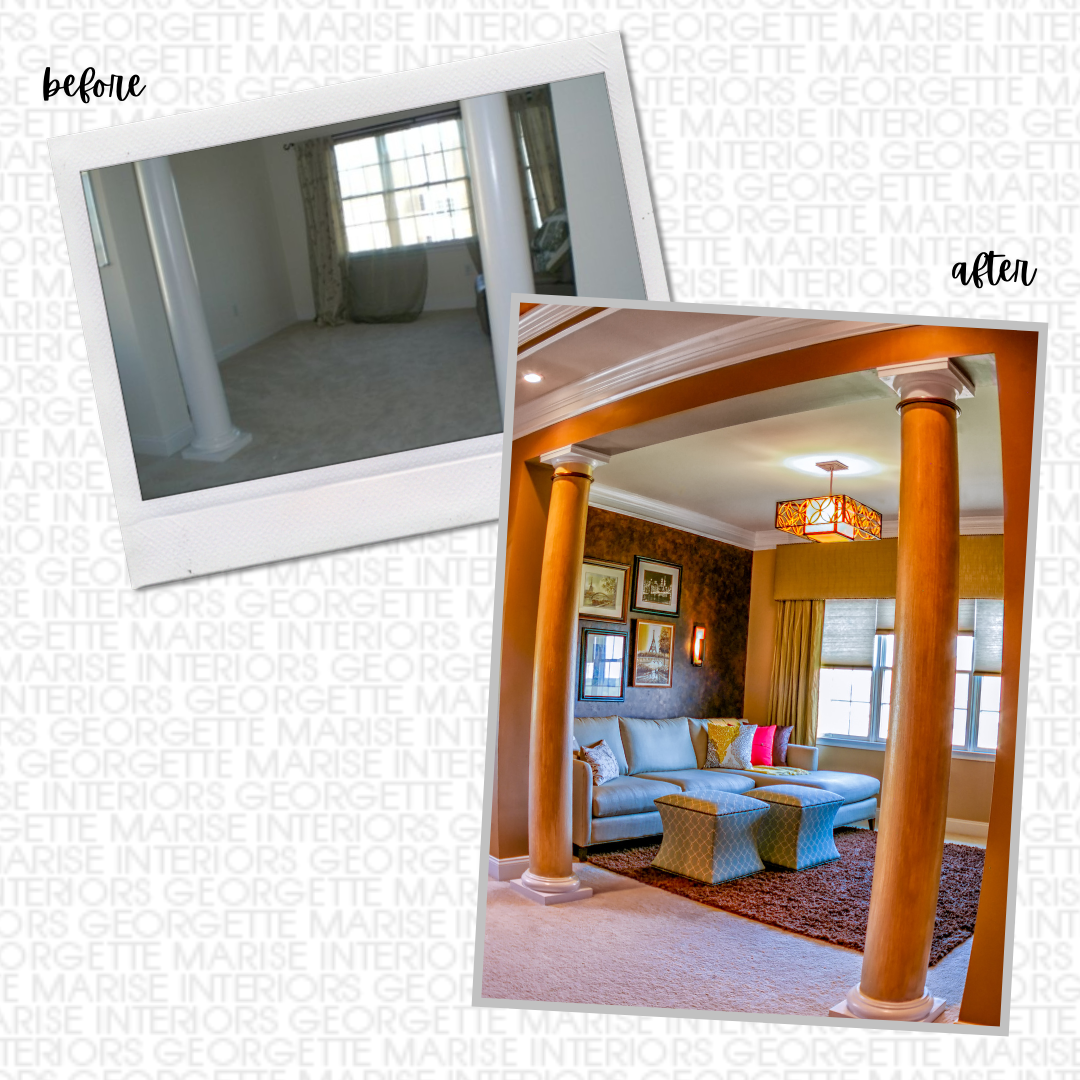
before & after of a Sitting Room design in a new construction home
If you are feeling stuck and cannot figure out what to do next, how to pull everything together or need reassurance and validation of your choices (sometimes you need just an additional set of eyes!) reach out to me. I’m here for you, even if it’s a quick question. All you need to do is ASK SABINE!


Q & A: Understanding Color

Understanding color
To better understand color in a space, you must first understand your relationship with color. For me, color has always been part of my surroundings. Being from a Caribbean family of Haitian descent, I have always had a love for color. Whether it was handmade Haitian wooden carvings stained in rich, dark tones or paintings of the Caribbean landscape hung on the walls — color, in my eyes, had a way of adding richness, depth, and life to the simplest things!
Today as an interior designer, I have a deep appreciation for color that goes deeper than what looks beautiful in a space. When dealing with color, I often think about how it makes one feel, think, and behave. I believe that color can evoke emotion and change the perception of a space or thing.
I recently asked a few friends, past clients, and various professionals about their relationship with color and how color affects their lives. I asked questions like, Do you like color? Are you scared of it or drawn to it? What is your favorite color and why? Is your current home decorated with color? The responses fascinated me. I spoke to one person who grew up with collections of art in their home and certain colors bring back memories for them. Most of who I spoke with were not scared or intimidated by it, they actually LOVED color! For some, colors like purple give energy and scream happiness, for others colors like teal gives a sense of calm while others love yellows and reds because it brings joy to life! However, what was interesting to me was that although they loved color and were not scared of it some of them did not decorate with it.
To dive even deeper I went to my friend and color expert Michele Charles Gustafson, BComm, CIC. Michele is a Certified Image Consultant, Color Expert, and International Confidence Coach. I first met Michele on my podcast Coffee n Tea with S & L, and I loved her perspective of color and her explanation of how each of us uses color differently.

Michele Charles Gustafson, BComm, CIC
Sabine: How can color specifically bring out one's personality?
Michele: Color is an element of personal, emotional expression. When done well, color doesn't bring out one's personality; it reflects its truth. Every color has an expression of a character value, aspiration, intent, and action. When one learns to read color in this way, they can match it to their environment from their homes to offices, wardrobes, and personal branding.
For example, blue isn’t just one blue. Teal, cobalt, cornflower, or cerulean all have distinct values, aspirations, intents, and influences to action. While general color psychology says blue is about trust, the difference in quality and characteristics of a blue will change it from calming trust to persuasive trust to connective trust -- all are different blues.
Sabine: Sometimes colors have the power to affect our mood. With so many options to choose from, how can we be intentional with our choice of color(s)?
Michele: A big question. Color ALWAYS affects mood. The best way to be intentional is to be aware that color is an art and a science. There is a reason why certain hues draw you in - most people don't know why, though.
The colors that make you feel comforted, at peace, or even powerful have characteristics in common. They are, though you may not be aware, usually fall into groups in your personalized color palette. Once you understand the particular color characteristic in common with the colors that catch your intuition, know that there are more than 30 other complementary hues that can give you new and exciting ways to express yourself. Each color coordinates seamlessly with each other, and all can move between your interior decorating, to your wardrobe, to your mobile phone case -- and with every detail, the expression will feel "like you."
“We are people. We have things to say with our lives, using color in a personal way can help us express it no matter how blank the canvas, the trends of the day, or the influences around us.”
—Michele Charles Gustafson
Sabine: Do you feel that it's important to balance color with neutrals?
Michele: Neutrals are a must to balance the intensity, activity, and emotional power of any hue, but know, that neutrals carry messages too. Every shade of grey doesn't mean the same thing; every tint of cream doesn't offer the same emotion. Combining hues and neutrals from a complementary color palette adds a fuller range of emotion and intention to any palette combination.
The color psychology of using all neutrals is limited, in my opinion. Even in a modern or minimalist aesthetic, there is always room for some tint, tone, or shade of a hue. We are people. We have things to say with our lives, using color in a personal way can help us express it no matter how blank the canvas, the trends of the day, or the influences around us.
Michele teaches entrepreneurs, professionals and community-builders to use her Hue and Style® process to turn how they show up into a permanent superpower for personal branding, visibility, and new success. Find her online and socialize with her on Instagram, Facebook, and Twitter. Share in the comments below your relationship with color.
À la prochaine,


Bring Happiness Into Your Home with These Quick Decor Changes
These past few weeks of being in self-isolation have made me look around my house more closely at ways I can improve the look and feel of my home. I do a lot of work from my house but I can’t remember the last time I’ve been home this long without leaving for certain appointments and the everyday coming and goings of life. You may be having the same experience. If you’re like me and looking around your home you feel inspired to change a few things. However, we have to remember the goal isn’t to have just a “pretty” home but to have a home you enjoy being in.

Our homes should be more than a collection of beautiful objects, our homes should reflect who we are. You’ve probably learned more about yourself quarantined in your home than ever before. Have you already made a list of what you would like to change in this room and update in that room? I have! These unpredictable times have also brought emotional stress, worry, anxiety, and fear. How we feel in our homes can help us mentally and emotionally. Here are some small changes you can make in your decor that will add a sense of happiness (they always bring joy to me, personally).
…the goal isn’t to have just a “pretty” home but to have a home you enjoy being in.
Bring In Meaningful Artwork. As an interior designer, I believe that artwork is personal. What may look perfect in one home may not add any aesthetical value to another home. The best artwork is the one that creates a conversation and that brings life to a room. I wrote a blog post for Mother’s Day two years ago about the vintage Mother and Child sketch by Picasso in 1904 that once belonged to my late mother. She never had it framed growing up but always had it placed in her bedroom. It wasn’t until she passed that I noticed it was a Picasso print. The image of a mother holding her child made me think of my mother which made me immediately have it custom framed. I couldn’t choose a room to display it in so I decided to hang it in the hallway at the top of the steps, where I look at it every day. It’s by far my favorite and most meaningful artwork in my house because of the story. For you maybe it’s a painting you purchased years ago in your travels that is buried somewhere or a family photo you took that you never hung-now is the time to hang it up. Switch up your artwork and choose artwork that puts a smile on your face when you look at it! A piece of art that speaks to you.
Add House Plants. We recently purchased a new palm floor tree and it brought me so much joy! House plants not only have qualities like eliminating toxins and chemicals such as carbon monoxide, benzene, formaldehyde, and ammonia (to name a few) but they also bring an organic feel to a space. It’s the feeling of bringing nature indoors. Before you purchase any house plants decide on a location that will meet it’s care needs. A good rule of thumb to remember is ferns, for example, don’t need direct sunlight but love humidity-making kitchens and bathrooms great options. Succulents, however, love the sun but don’t need a lot of water.

Paint Your Walls. Changing your wall color can dramatically transform the look and feel of your room. I know I say this over and over but it’s true. Colors have the ability to affect our mood, productivity, and behavior so be sure to pick your colors wisely. When I select a paint color for a client before I ask about the furniture or accessories they want to incorporate into the space-I ask about how they want to feel when they’re in the room. This is important! How they want to feel in the room determines whether I use a palette with warm colors, cool colors, complimentary colors, contrasting colors, or monochromatic. If you are having a hard time selecting a color get a paint deck and as you’re flipping through the paint strips set aside the colors that grab your attention. The colors that make your eye stop after browsing through color after color. Start there and narrow down your options based on which colors will coordinate best with your furnishings.
Even though we are confined to our homes, I hope that your surroundings bring you joy as well as a sense of happiness. Leave a comment below on some house projects you would like to start tackling during this time.
À la prochaine,


get a copy of my handy decorating rules of thumb. subscribe now!

Why Creating a Homeschooling Space Doesn't Have To Look Like a Classroom
As I sit here and write this post I can’t believe we are in week 5 of quarantine/self-isolation. When this COVID-19 (Coronavirus) pandemic first happened the first thought that came across my mind, as a mother of a kindergartener and a third-grader was “I have to homeschool?!!!” “I’m not ready for this, nor am I a teacher!!!”. The thought of making sure my children are learning what they’re supposed to be learning was nerve-wracking. Now in week 5, I have to say I am in a much better state of mind thanks to the support of their INCREDIBLE teachers, advice from mentors, and several daily deep breathing exercises. Deep breathing is EVERYTHING!
Sometimes change can be hard for us to get used to. Having to work from home while our kids are being schooled from home can be very challenging-especially if your children are smaller and need more assistance. Having a multifunctional space that serves more than one purpose can be advantageous. When it comes to homeschooling or “crisis schooling” (as my friend better defined our current situation) we don’t need to transform our homes into classrooms. Classrooms in school buildings are designed solely for learning. Our homes are designed for much than that. Our homes are where we live, work, entertain, cook, eat, bathe, relax, sleep-they serve many purposes. The goal is not to transform your home into a classroom, the goal is to create a safe and comfortable space that your child can live AND learn.
Create More Than One Space For Learning. Kids like to move around. Think about it, when your kids are in school they are not sitting at their desks, staring at the board listening to their teacher for the entire 7 hours. They have a full schedule including snack time, reading time, art electives, labs, gym, lunch, recess, etc. Most of their day is broken up into multiple activities that take place in different rooms/areas/sections of their school building. Instead of focusing on transforming one space in your home for schooling maybe start with a general area that serves as a dedicated space for their supplies, paperwork, projects, etc. then create multiple “areas” in your home where they can work.
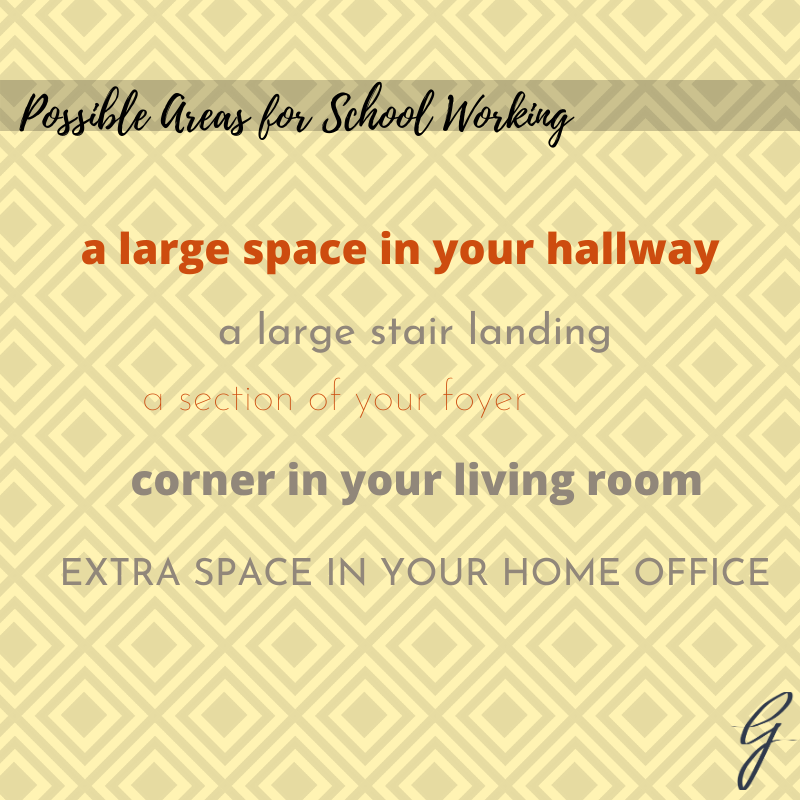
Make It Functional & Stylish. Your homeschooling space should blend with the overall design of your home. Add functional elements that are also stylish.
Last year I designed a formal living room for a family that had to include a homework station for their 2 daughters. This room had to serve two purposes - to entertain guests as well as an area for their kids to do school work. I didn’t want the homework station to overpower the room by having it look like an obvious kid’s area. The homework station had to compliment the style of the living room. For me to accomplish that I chose to place 2 simple white consoles with drawers side by side on a long wall which allowed enough surface space for 2 people to work comfortably. I added a small ledge tucked below the desk for the printer and computer storage. The monitors were placed centered on each workspace with stylish accents used as pencil/book holders and paper storage. Since this was a formal space I choose not to add your typical swivel desk chair but instead 2 velvet-textured Parsons chairs that could also be used as additional seating when entertaining. Above the desks, the design included a white floating shelf measuring the length of the 2 consoles for additional storage and display. I included dark linen boxes as a contrast for storing paper, projects, etc that could be concealed. For wall decor, I included a cluster of frames to be hung above the wall shelf to display custom art and pieces personal to the family. For lighting, I added 2 pillar floor lamps on each side of the wall framing the consoles to complete the look.

homework station mood board
Get Your Kid’s Opinion. This is a time of transition for everyone-for you as the parent and for your kids as well. Allow them to voice their opinion about where they would like to work. Depending on their age this may vary in response. Some kids may be able to do their work independently and some may need more attention based on their age and grade. Once you get all their opinions, take the ones that are realistic and add your opinions to create a final decision.
I hope this inspires you to create multifunctional rooms that serve many purposes and can be enjoyed by the entire family. I want to hear from you below in the comments about what space your kids currently use for schooling. Share below!
If you’re not sure where to begin to create a multifunctional let’s talk. Schedule a FREE 15-min call HERE>> and let me help you through your design dilemmas so you can have a space that works for your family.
À la prochaine,


How to Update your Living Room Without Buying New Furniture
They say most people change or update the furniture in their homes every 7 years. I personally believe this is done because as humans we get tired of looking at the same thing over and over. This is probably why we see many companies remodel their place of business every couple of years. Change, no matter if it’s big or small, can be refreshing especially in our homes.

living room design
Your living room is typically the first space guests come in when visiting your home. This maybe a combined living/family space for the entire home or it maybe a separate formal room that is reserved primarily for guests only. Either way updating the decor of your living room can bring new life into your entire home. Even the smallest changes to your living room’s decor can improve your mood and make you more productive.

rearrange your furniture
Rearrange Your Furniture. The right furniture layout can change the productivity of your living room. Often times we place our furniture in one location and never see the other possibilities for the room. If possible try moving your sofa to another side of the room (preferably the longest wall in the room-since the sofa is your longest piece of furniture). If you have an open floor plan try floating your sofa in the middle of the room and move your chairs to the opposite side of the sofa. If moving your sofa is not an option, try moving smaller furnishings like the tv console table or accent chairs.
Change your Wall Color. Color trends change every year. A color palette that was in style 15 years ago maybe outdated now. Giving your living room a fresh coat of paint has the power to transform your room. Be sure the color you choose coordinates with your room’s overall color palette and any neighboring rooms.

lighting fixture
Change your light fixture. Proper lighting is essential in a room’s design. Just like colors can become outdated so can light fixtures. Something as simple as updating your table or floor lamps can quickly update the decor of your living room.

drape a throw on your chair
Add Layers. This may seem like a small change but it is the fastest and easiest way to update the look of your living room. By simply switching out your pillows, throws and area rug you have given your seating area a mini makeover. Be sure to add pillows with different texture and patterns for visual interest. With the seasons changing now is a perfect time to get a new throw to drape against your accent chair, this will add color and layered texture to your chair. Don’t forget about your area rug! whether you have a hard floor surface or wall to wall carpet, adding a rug defines an area. If you have a monochromatic or neutral palette in you living room, updating your rug to a print or texture will complete your space. Make sure your area rug is not too small and fits comfortably within your seating area.
Revamp your Wall Decor. Your wall decor helps tell the story of your rooms design. Start with a main artwork and allow the other wall decor pieces to coordinate with the main piece. Try changing the frame of an existing artwork or print to give it new life in your room.
Share in the comments below when was the last time your living room was updated.
À la prochaine,


Bring Summer into your Home with These Lively Colors

Summer Colors for the home
Summer is in full gear and that means bright, organic colors that remind us of the outdoors. I am personally a fan of rich color tones blended with soft neutrals and this summer my color picks are inspired by fashion, tropical foliage, and the different shades of a sunset.

SW 6626 Sunset is a beautiful, bright orange with a slight peach undertone. This warm color pairs nicely with a soft off-white neutral yet can contrast with a deep green such as SW 6432 Garden Spot.
SW 6432 Garden Spot is a fresh, organic green-leaf color that is sure to blend with any color palette this summer. Add this cool color to contrast against the warm SW 6626 Sunset or SW 6671 Curry tones. If you prefer a neutral color palette use this rich green as an accent color against your crisp, clean white decor.
SW 6671 Curry is a warm punch of color that will spice up any room or space this summer. This golden, yellow color contrasts perfectly with SW 6432 Garden Spot or a rich teal color.
Pull inspiration this summer from what’s around you to get started. Some great inspiration sources are nature, your wardrobe, artwork, magazines and Pinterest of course.
If selecting colors for your home that reflect your style sounds overwhelming, exhausting or even impossible try my online Paint Color Suggestion service. For a flat rate I will select a complete color palette that will have your guests saying “Wow!”.
À la prochaine,


Decorating a New Home During Life Transitions
Perspective is everything. I recently had a client of preteen girls who were initially moving into a new house. Her girls were excited about getting their own room. The project was put on pause due to some unexpected flooding that occurred (never fun). Two years later the mother reached out to continue the girls’ rooms except now the girls had to share a room. The girls were not excited about this change of course. By this time the styles and needs of the girls changed and they could not come to an agreement on style, furnishings, colors or placement. Through seeing some visual design boards and shopping the girls were starting to see the vision. As an interior designer, I love tackling challenges! I made it my goal to design a shared bedroom that represented each girl. As I started to design there were many changes and obstacles but seeing the completed space as the finish line was my focus.

Mood Board: Each girl’s style and needs we represented in this design.
Fast forward to now, demolition is complete, drywall/plumbing/lighting is done, painting is finish and furniture has been ordered. Seeing the completed space even in the midst of construction chaos is easy for me but not so much for preteen girls. They were getting anxious and I understand. I later had a conversation with the mother and she explained that the girls were going through several life changes in their home life and this project represented a space they can call their own. That put everything in perspective for me! That made the design even more important. This was more than putting pretty things together. It was about creating an environment where they can feel safe and comfortable to be themselves.
Life changes can be challenging. Whether you are moving, newly married, just had a new baby, became an empty nester, maybe just got a new job, or going through a divorce the look and feel of your home during these life transitions can make a big difference.

Start with a Purpose
Your home is more than a group of walls, ceiling, and floors. It’s your personal space. It doesn’t have to be perfect (nor does that exist) but it should reflect your style and personality. Define each room. For each room or space ask yourself: What will I be doing in this space? (resting, entertaining, dining, working, meditating, reading, playing, etc.) How do I want to feel in this room or space? (calm, productive, happy, safe, relaxed, energized, etc.) Defining these questions are the first step to accomplishing a new space.
Plan
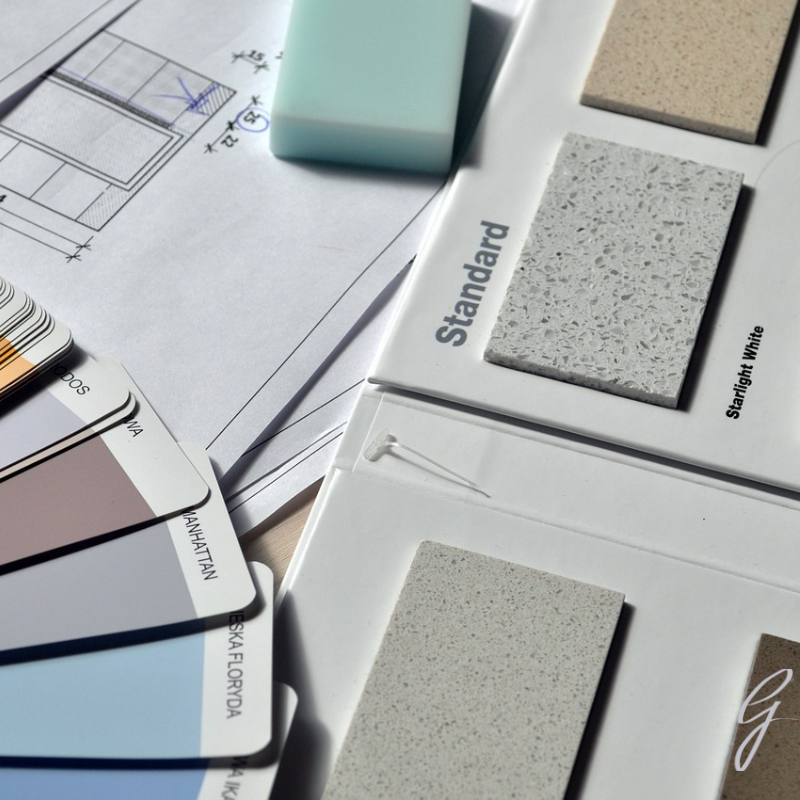
After you’ve defined the use of each room or space, it’s time to plan. An easy way to plan is start with developing a budget. Once you have a budget create a floor plan or layout. You can do this with your interior designer or on your own if you are going the DIY route. Measure your space and put it on paper or use a planning software.
Remember we talked about finding your purpose? That is going to come in handy for the planning stage. It’s time to decide what furnishings are going to be needed in the space. If you are incorporating some existing pieces start there. Begin with the largest furnishings and add them to the plan. Ex. If you are creating a reading area on a 2nd-floor landing space to feel relaxed you might want to add a chaise, a comfortable plush chair, or some floor pillows near a group of floating shelves. Also, be sure to complete any construction, electrical, painting, or installation needed.
Decorate
Once you’ve finished planning and everything is in, it’s time to decorate! When installing it’s always a good idea to start with the placement of your largest piece of furniture. Once your furniture, tables, rugs are in place add your accessories (the pillows, wall decor, framed pictures, table tops accents, plants, etc)
Your space should accomplish what you want it to accomplish. By being intentional about decorating your new home you can help decrease the stress that happens during life transitions.
À la prochaine,
